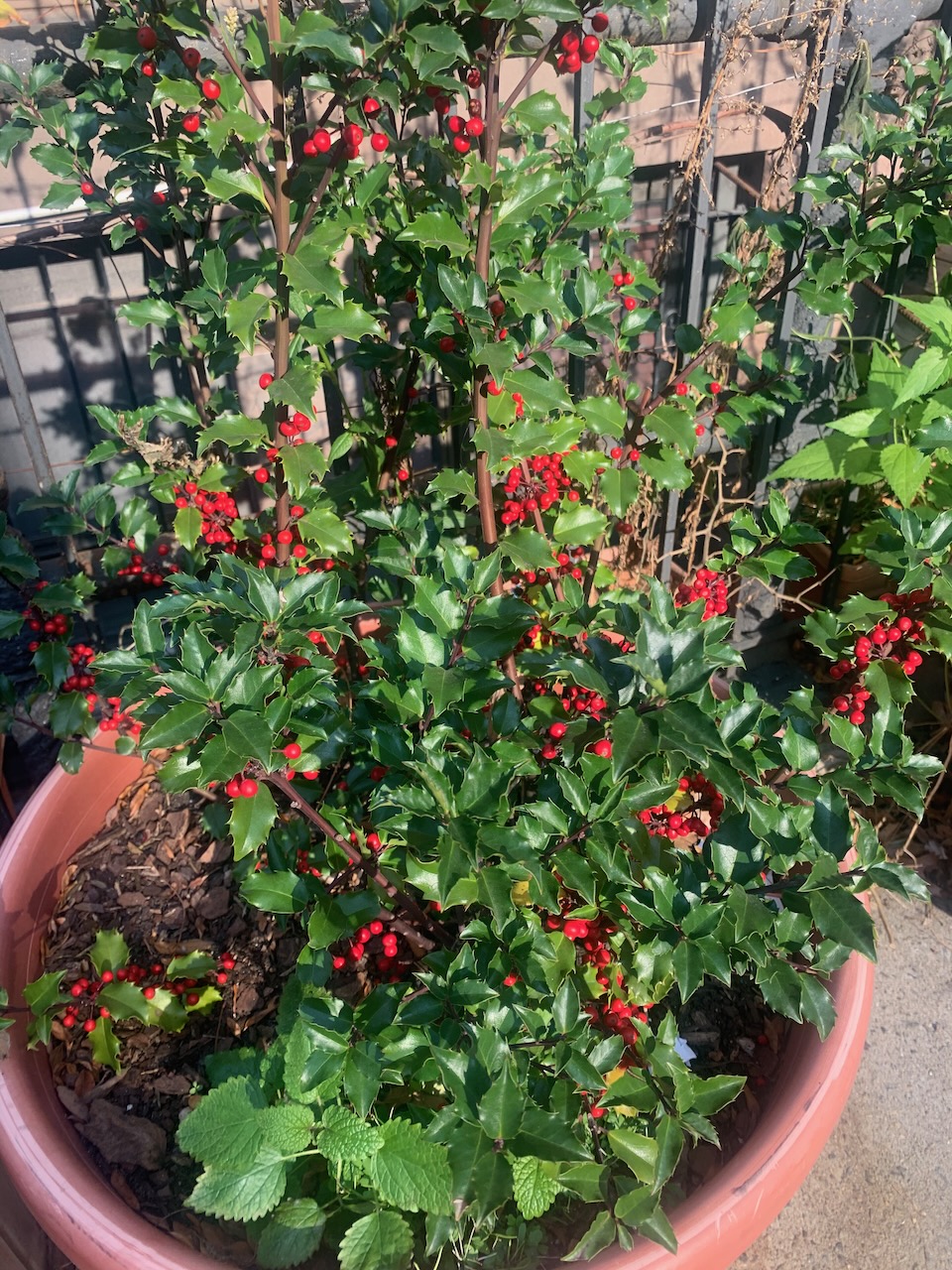
The new holly has produced a lovely crop of berries to add some bright color to our winter.
Sidewalk Greenspace on New York's Upper West Side
The new holly has produced a lovely crop of berries to add some bright color to our winter.
Most of the flowers are gone from the garden, but the cockscombs (Celosia) are still vibrant.

Newest addition to the garden: a large Rudbeckia (“black eyed susan”). It’s slightly bedraggled after its trip here by truck, but I am optimistic that it’ll perk up over the coming days — and I think it still has enough time to make itself at home that it has a decent chance of surviving the cold this winter.

The spotted lanternfly is back again, and in larger numbers than last year — I’ve seen five in the last 36 hours, and only managed to kill two of them.

Please be on the lookout and do your best to kill them on sight, before they damage our trees and garden plants.
The latest addition to the garden is a lovely holly shrub donated by some neighbors, now repotted in a giant tub donated by another neighbor, with a hundred pounds of soil ordered online and delivered by cargo van.

(Not pictured: three more identical tubs, each with their own hundred pounds of soil, awaiting more flowers expected to arrive over the coming few days.)
The evergreen foliage and bright-red berries should provide some lovely color this winter.
The label describes it as a “Blue Princess” Holly (Ilex × meserveae) which could eventually grow to be 12 feet tall, although I suspect that the limited volume of soil will prevent it from reaching that size — I suppose that if it does well I’ll need to prune it back to keep it from getting much past six feet just to keep it manageable and avoid obstructing the light entering the building’s windows.)
I was pleased to receive notice that I had passed the exam for a Citizen Pruner License, giving me authority to do minor pruning and related care for New York City’s street trees.

New Yorkers are so blasé that I expect in practice I could do nearly any sort of arboreal work without ever being asked to show my license, but if the situation ever arises, I will be ready!
It’s mid-July and despite the heat, the garden is looking lush.
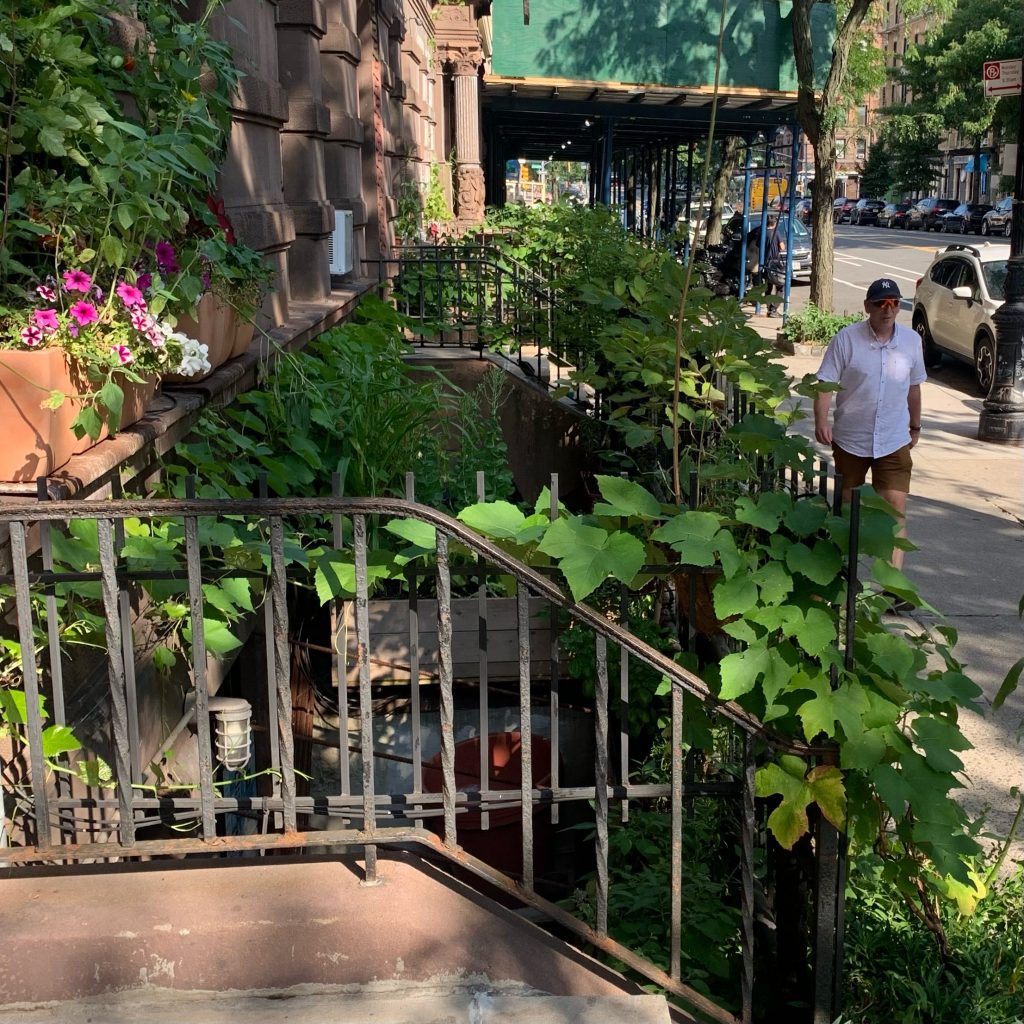
There are so many kinds of plants and animals in the garden, many of which have wandered in on their own rather than being deliberately cultivated, that I sometimes turn to outside experts for help identifying newcomers.
Sometimes I ask for help from Facebook friends, but often I turn to the iNaturalist website, where subject-matter experts will help to identify species they’re most familiar with.
You can see some of the observations I’ve submitted here:
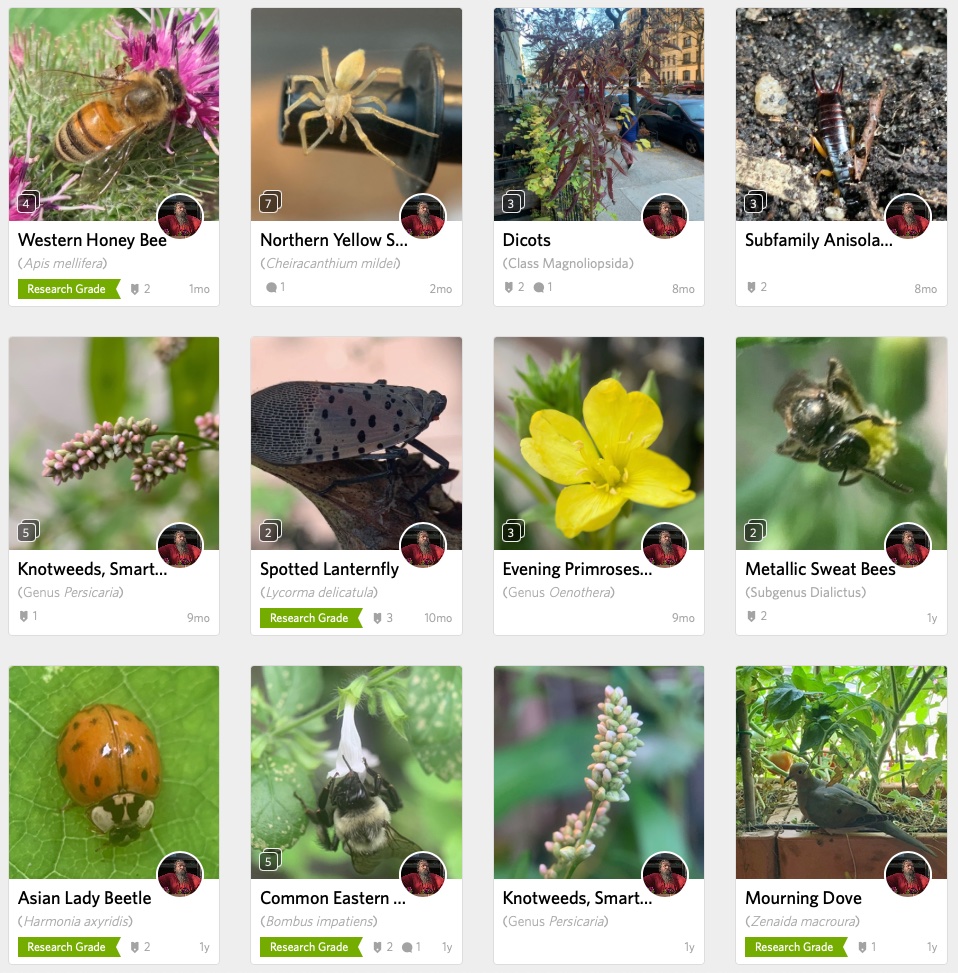
If you’re an iNaturalist user, follow me @mcavalletto to keep up with new finds!
Much of the garden’s catnip is now in full flower.
All of this catnip stems from a single small flowerpot I brought home and placed on my windowsill a decade ago — it’s a prolific self-seeder, and has spread itself to multiple nearby containers and treebeds.

The sidewalk planters we added this spring have provided some lovely additional space for these new strawflowers (Bracteantha) to catch the sun.


