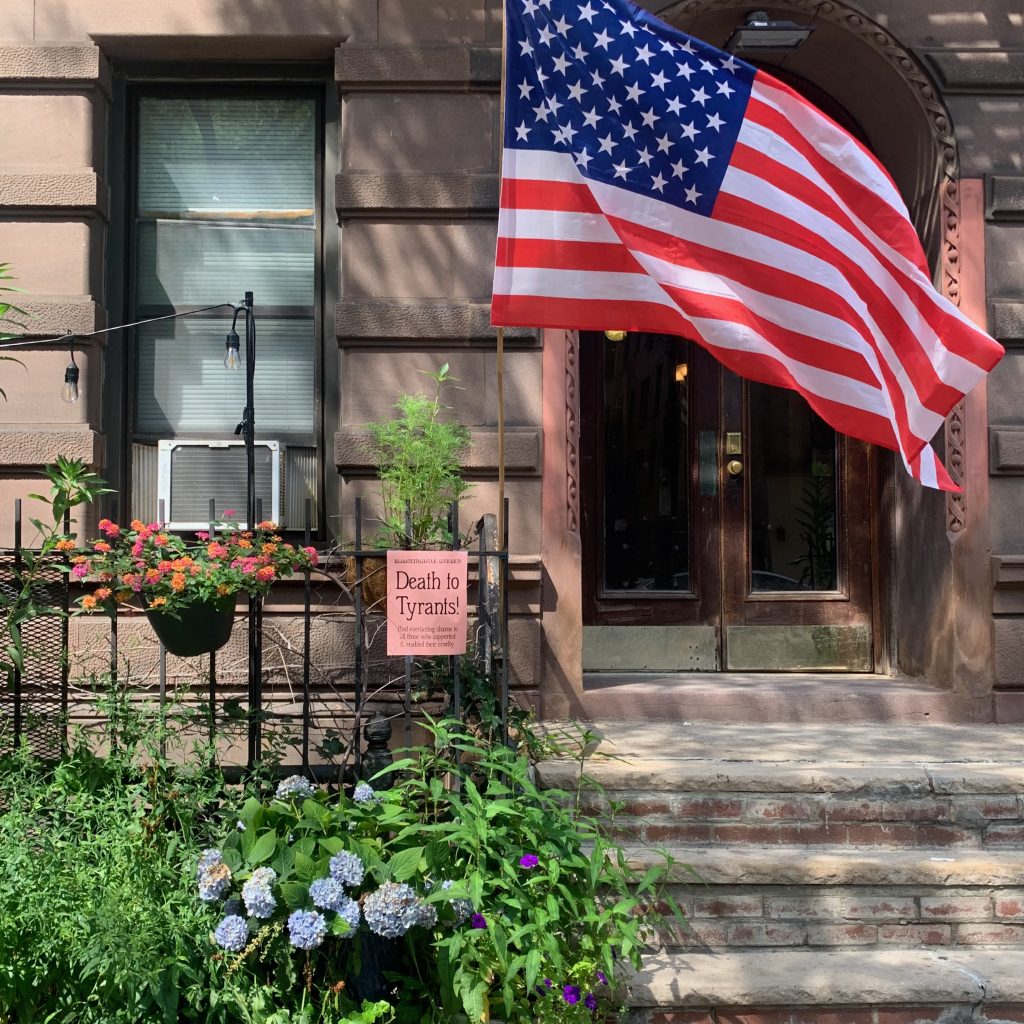
Getting in the holiday spirit with our flag and some patriotic messages.

Sidewalk Greenspace on New York's Upper West Side
Getting in the holiday spirit with our flag and some patriotic messages.

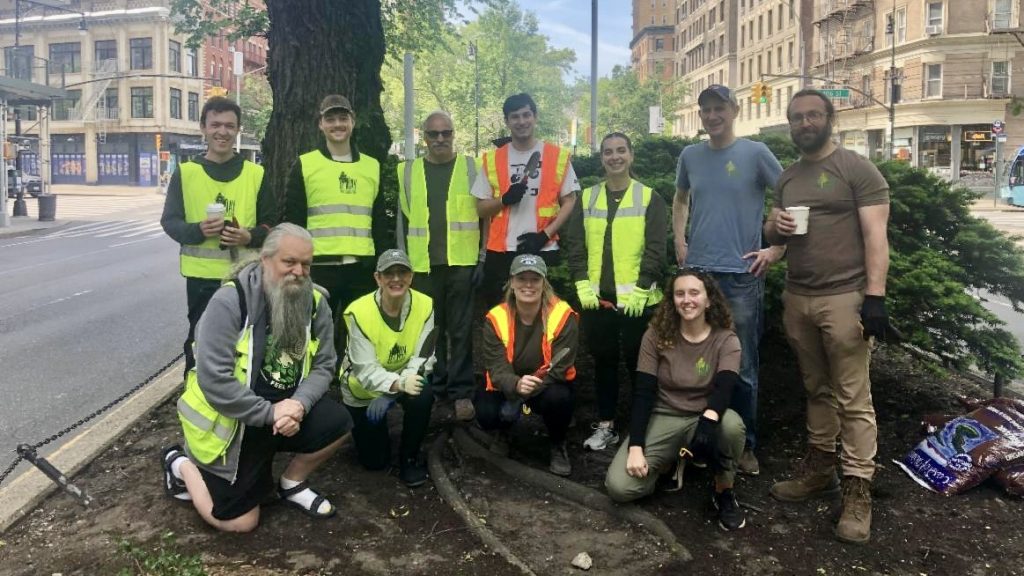
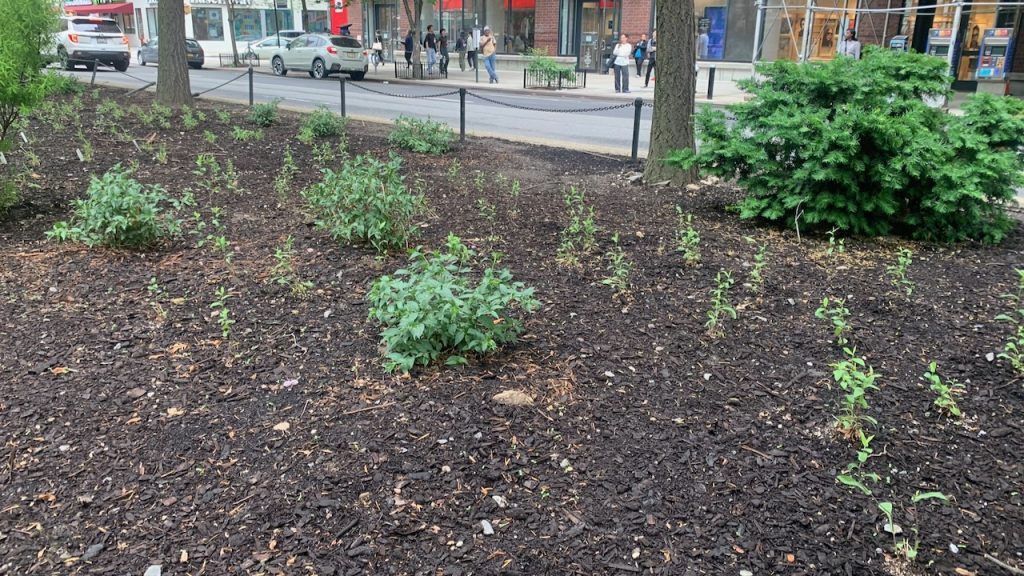
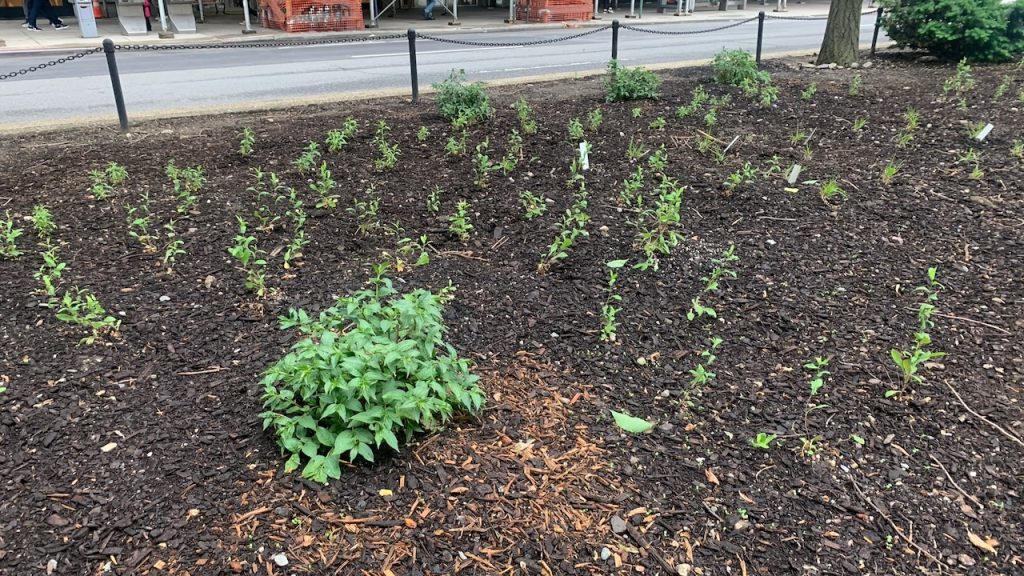
A number of volunteers joined the staff of the Broadway Mall Association this week to add some native plants to the median between 106th and 107th.
It was fun to meet other folks who care about greening urban spaces, and to spend a couple of hours digging in some aster cuttings and spreading a layer of mulch to nourish and protect the soil.

The association’s horticulturist, Ian, shared a bunch of interesting details about the median plantings — it’s amazing how much life can be sustained in just a couple of feet of soil piled up on top of an urban subway line!


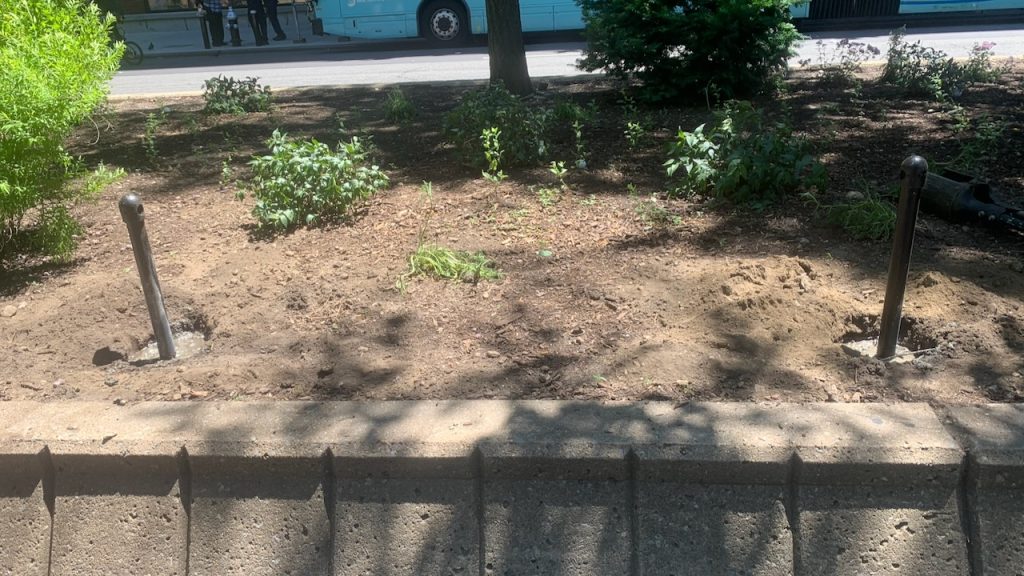
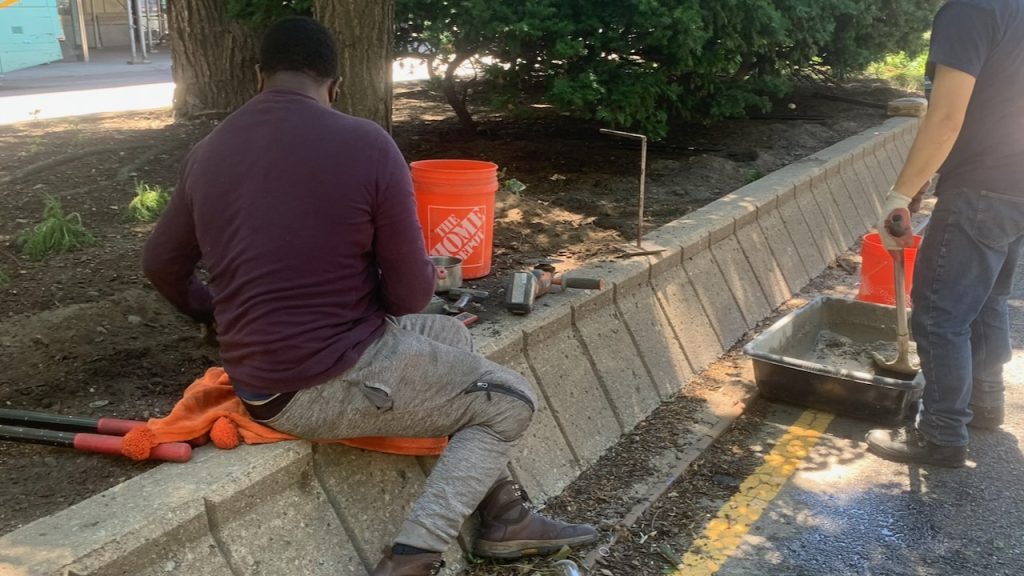
[Update, June 8:] A pair of contractors swung by that same spot this afternoon to repair a rusted-out section of the low chain boundary that runs along the edge of the median.


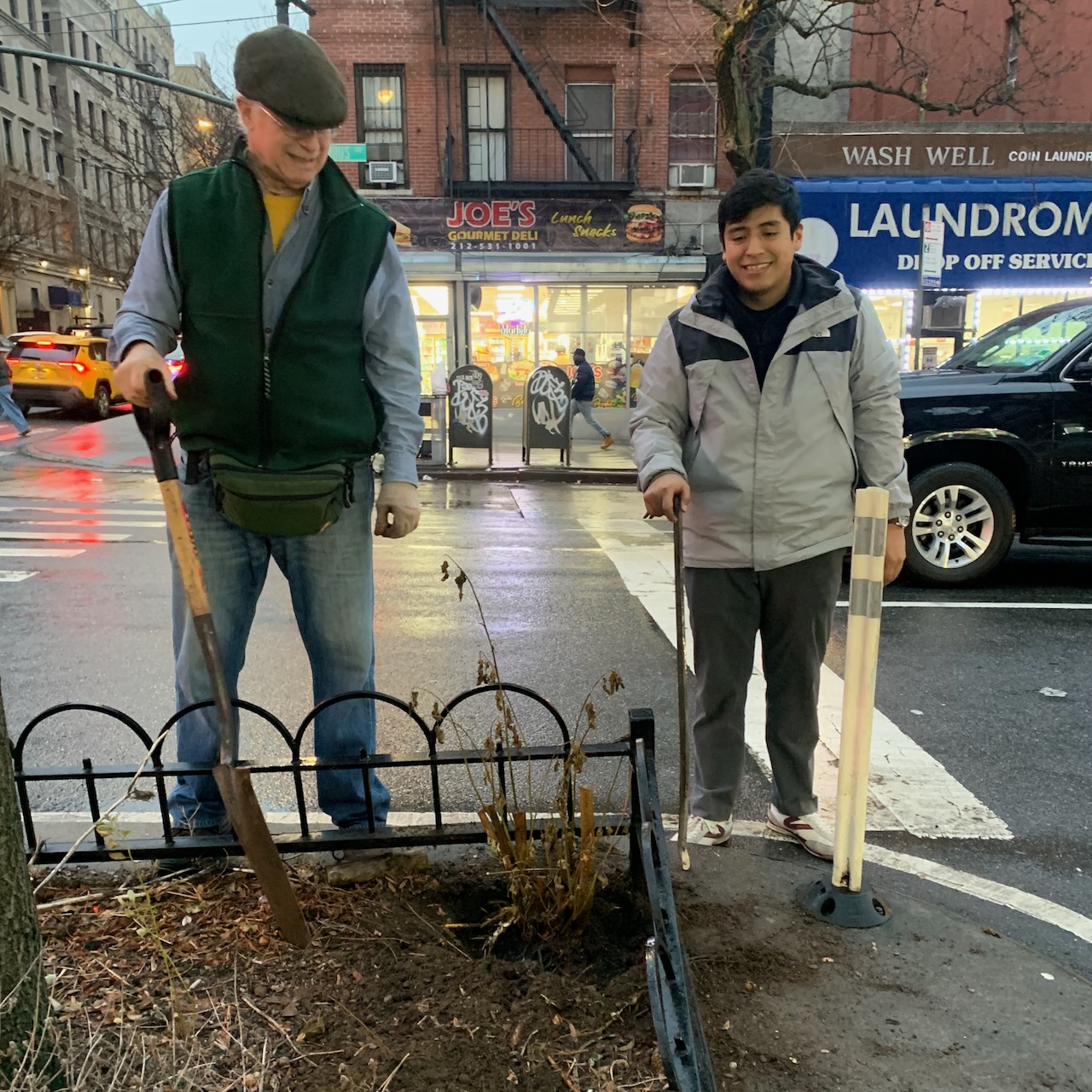
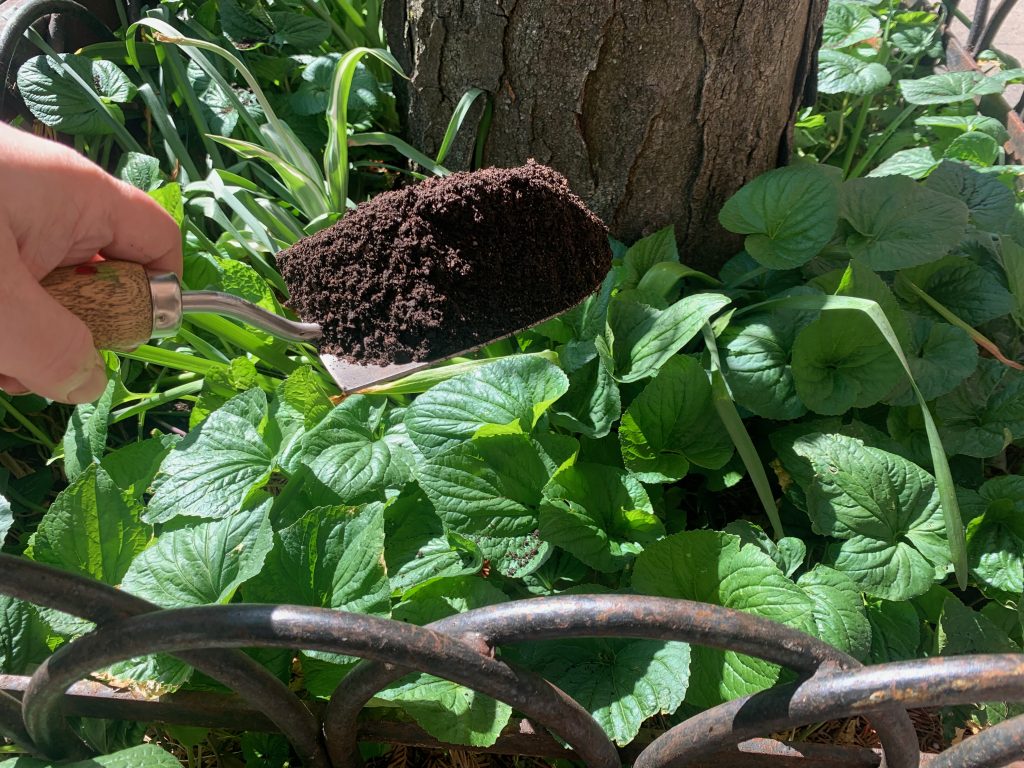
I did a bit of cleanup work in the treebeds along the east side of Broadway from 106th to 104th Street this week: cleaning out some trash, breaking up the compacted top soil, and mixing in a couple of bags of compost. I’ll come back next week to scatter some flower seeds and hope that a few of them will come up over the summer.
Caring for treebeds in this high-traffic area can be frustrating — fresh trash is tossed in them on a regular basis, dogs routinely urinate along the edges, and it’s challenging to get the storefronts to put any effort into maintaining them — but I remind myself that they’re still better off with some care than without, and perhaps over time we’ll see greater community engagement.


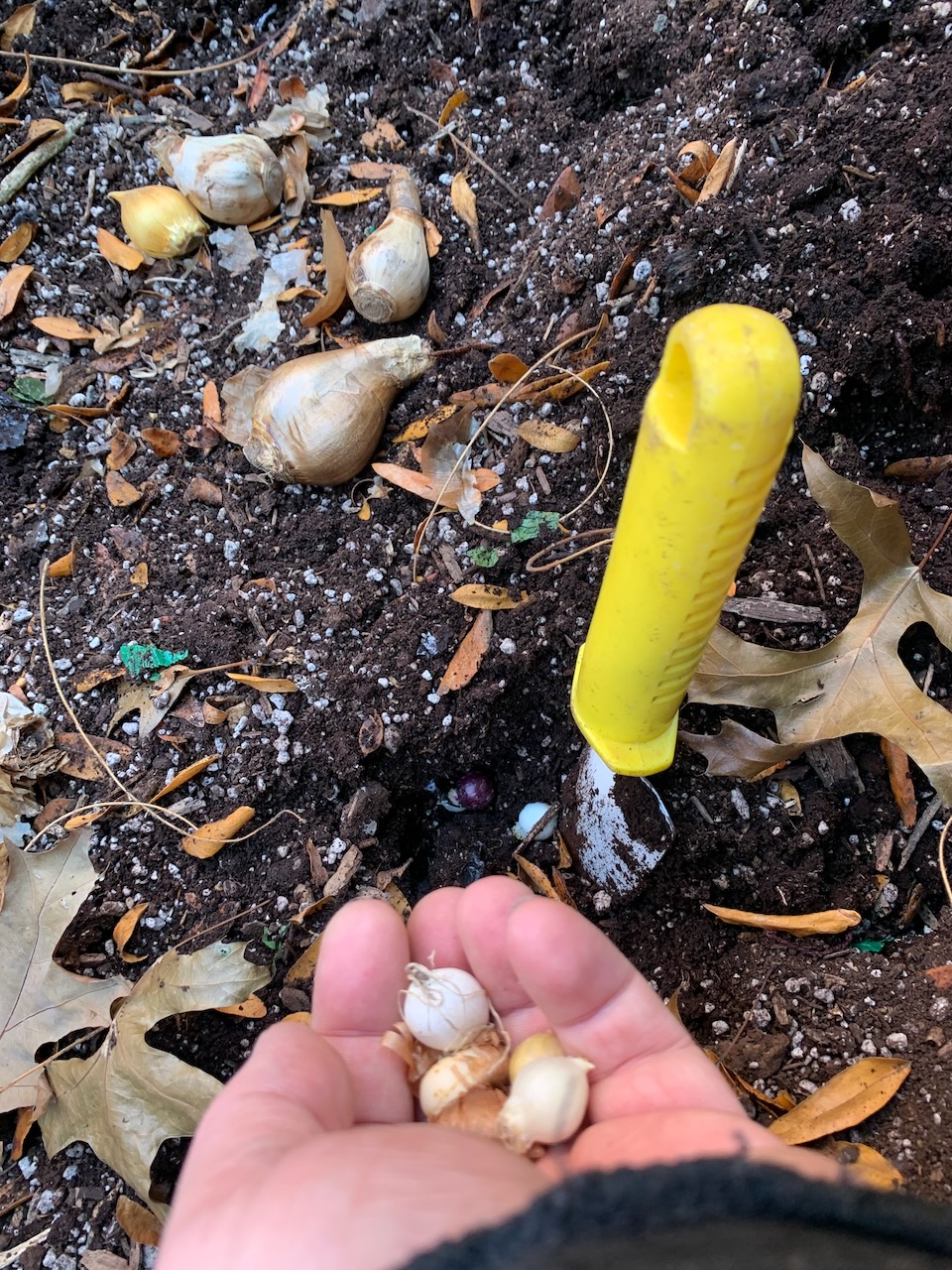
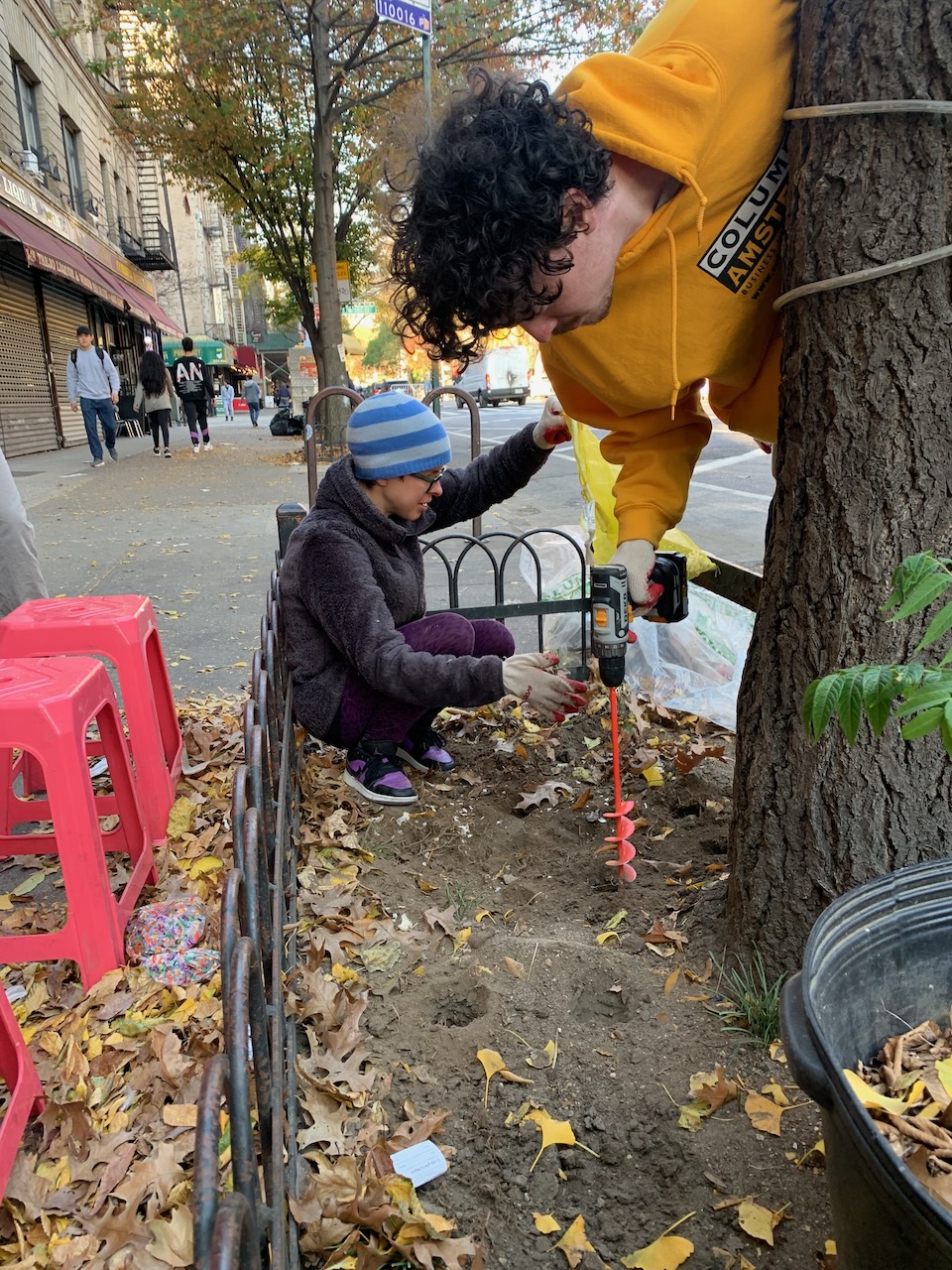
In addition to planting a few hundred bulbs (yes, we know that it is late in the season), Peter and Michael of the Columbus Amsterdam BID also put in some work to remove invasive shrubs from the cycle lane median along Columbus.
(Not pictured: my son Alex, who had been operating the power auger to speed bulb planting.)

I spent a few hours out with volunteers from the nascent 109th Street block association and then with the Columbus Amsterdam BID, planting flowering bulbs in the tree beds on four blocks just around the corner from us to bring up a little color in the spring.


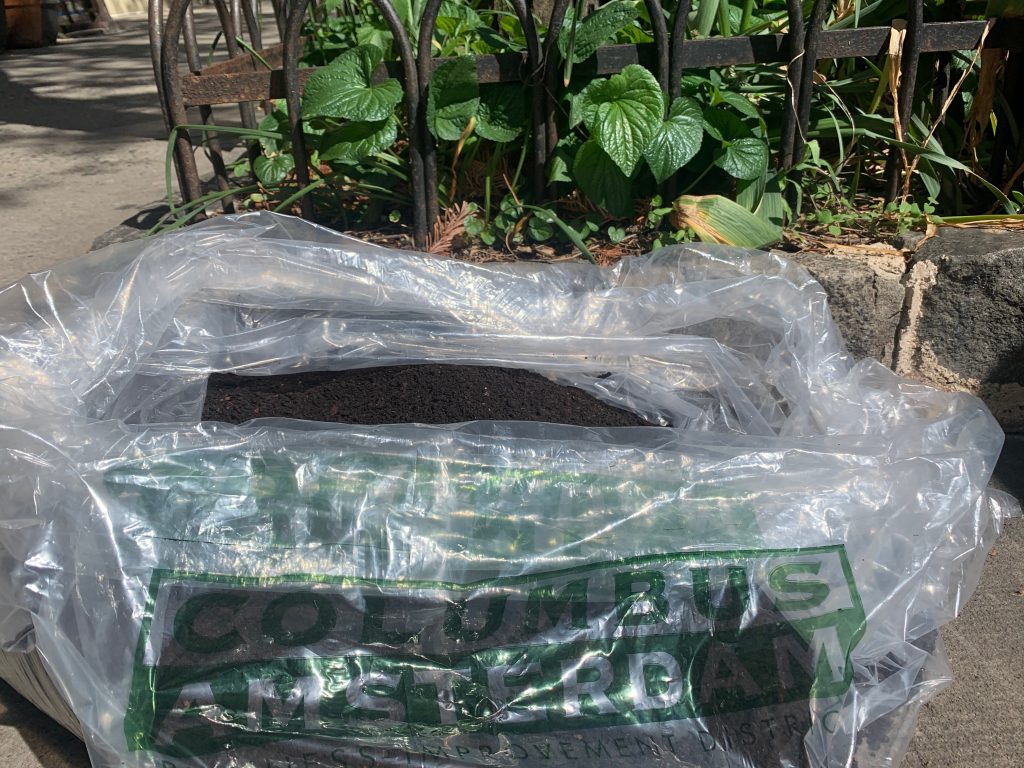
My thanks to the Columbus-Amsterdam BID for providing more than thirty pounds of compost produced by Big Reuse as part of GrowNYC’s community composting program.

This rich organic material will be scattered in a light layer over the surface of the soil in tree beds and sidewalk planters here on 106th Street to provide a slow but steady trickle of nutrients to the trees and flowering plants that protect and brighten our neighborhood.
Over the last decade, I’ve received more than three thousand pounds of compost from the Big Reuse composting facility under the Queensborough Bridge to be applied to sidewalk treebeds all over our neighborhood — which is why I’m incredibly disappointed to learn that the NYC government is killing it off with a one-two punch: eliminating all funds for community-composting programs from the city budget, and revoking the license for the under-bridge space so that it can be converted to a parking lot.
I hope that those short-sighted policies are reversed, or that our city finds another way to fill the gap that will be left by this tragic loss.

My thanks to NY Times photographer Jeenah Moon for sharing this lovely picture she took of me in front of the azaleas on our sidewalk.
With all of the chaos surrounding us, it’s nice to have this little oasis of calm to pass through every day.

The myriad benefits and occasional conflicts over the city’s sidewalk tree beds were the subject of an article in the New York Times this week:
In the Fight Over N.Y.C. Sidewalks, Tree Beds Are the Smallest Frontier
In a city with little private green space, tree beds on public streets have become coveted territory. But who gets to decide how they’re used?
Over 660,000 trees line the streets of New York City, and the beds around them take up more than 400 acres, according to a city estimate. While many people just walk by the rectangular openings in the sidewalk from which the trees spring — or, worse, use the spaces as trash cans and doggy litter boxes — others lay claim, unofficially, to these pocket-size patches of land.
As the weather warms, these caretakers swing into action…
Mr. Resler said neighbors have praised his miniature garden, but that he has also had to fish out beer cans and once felt compelled to speak to someone who was letting his pit bull jump over the tree guard and kick up dirt after it had relieved itself.
“This kind of thing lets you meet your neighbors, good and bad,” he said.
The Columbus-Amsterdam BID, which coordinates neighborhood-improvement efforts along those avenues, arranged for a bulk delivery of mulch from the city’s Parks Department, and asked for volunteers to help apply it to neighborhood treebeds.
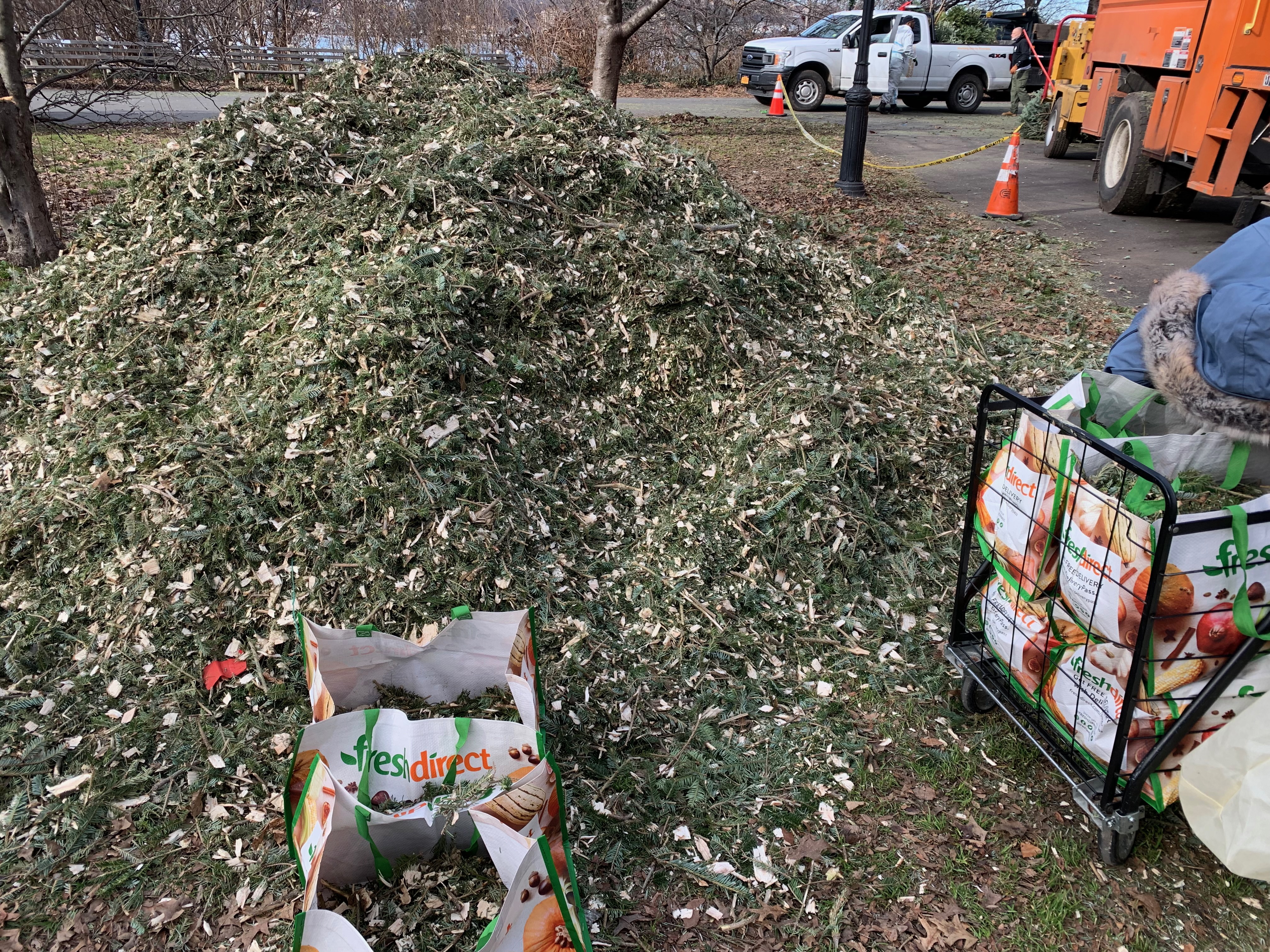
Continue reading “Neighborhood Treebed Mulching”Every December, many of the city’s residents bring home a small conifer for the winter holidays — and then discard them in early January.
Mulchfest is part of the city’s adaptation to this cycle: deploying large chipper trucks at numerous locations around the city, where people can bring their trees to be chipped, and optionally take home a bag of the resulting material to be used as mulch.
While most people just leave their tree, or perhaps take home a small bag of pine chips, there doesn’t seem to be any real limit to how much mulch you’re allowed to take, so I’ve learned to bring a shopping cart and a stack of empty tote bags, so I can bring home enough for a dozen sidewalk treebeds around the neighborhood.
The mix of pine needles, twigs, and chips will slowly break down over the coming year to provide a stream of supplemental nutrients to the soil, as well as improving moisture absorption and retention and building soil health.