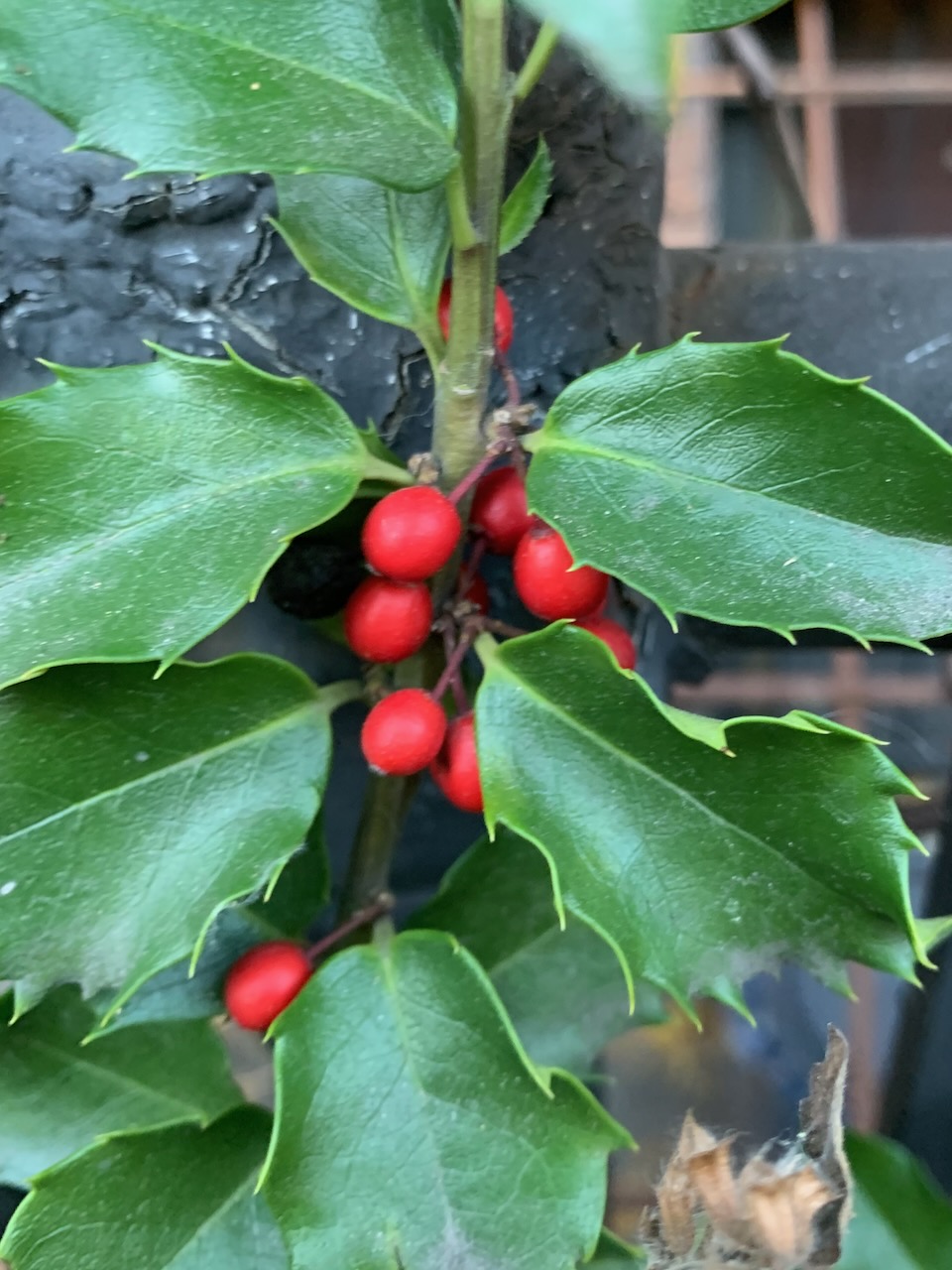
Our little holly bush has set some colorful fruit for the oncoming winter season.
Sidewalk Greenspace on New York's Upper West Side
Our little holly bush has set some colorful fruit for the oncoming winter season.
Summer may be over, but the sidewalk garden is still ticking along.
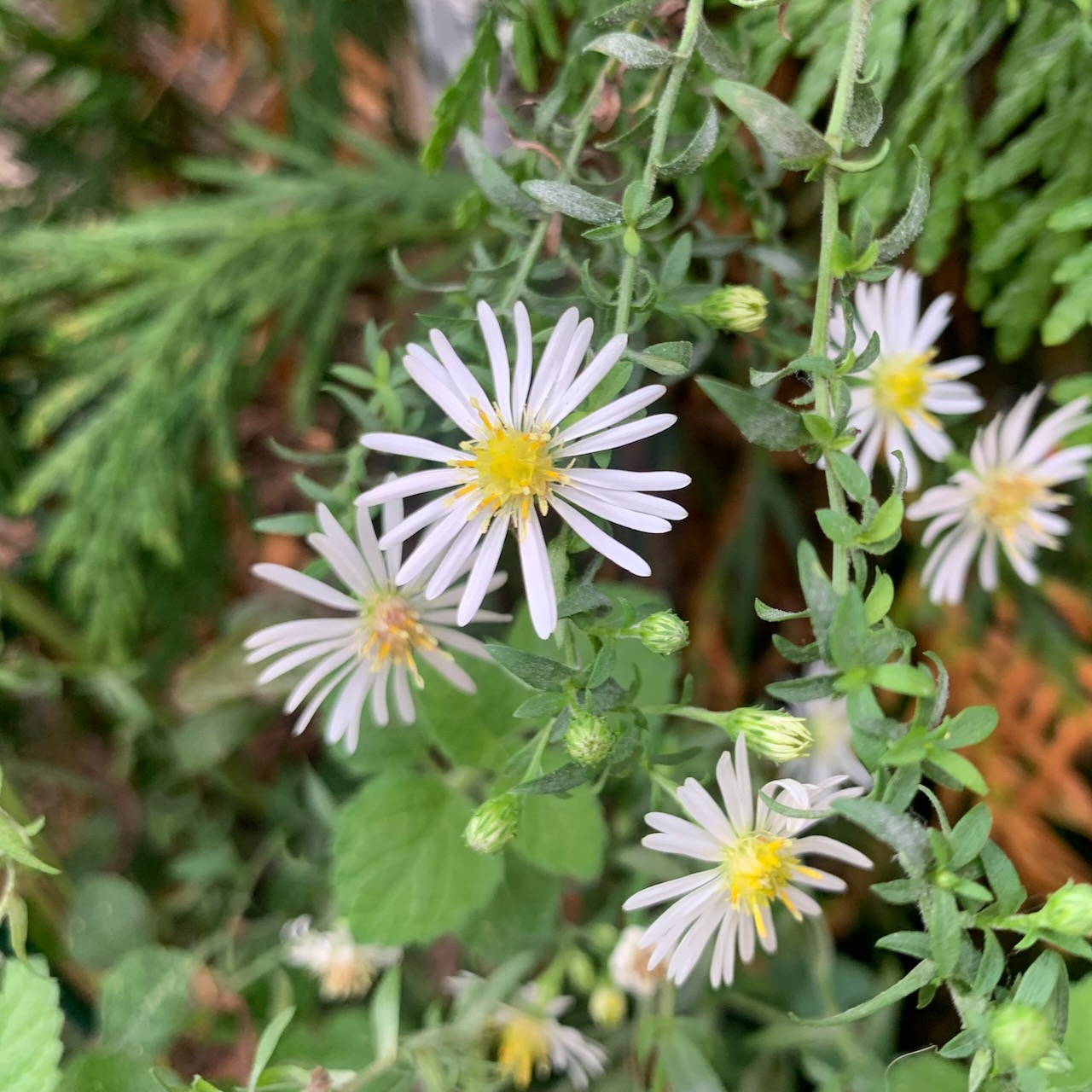
The asters which have looked plain all year are suddenly showing their delicate little flowers.
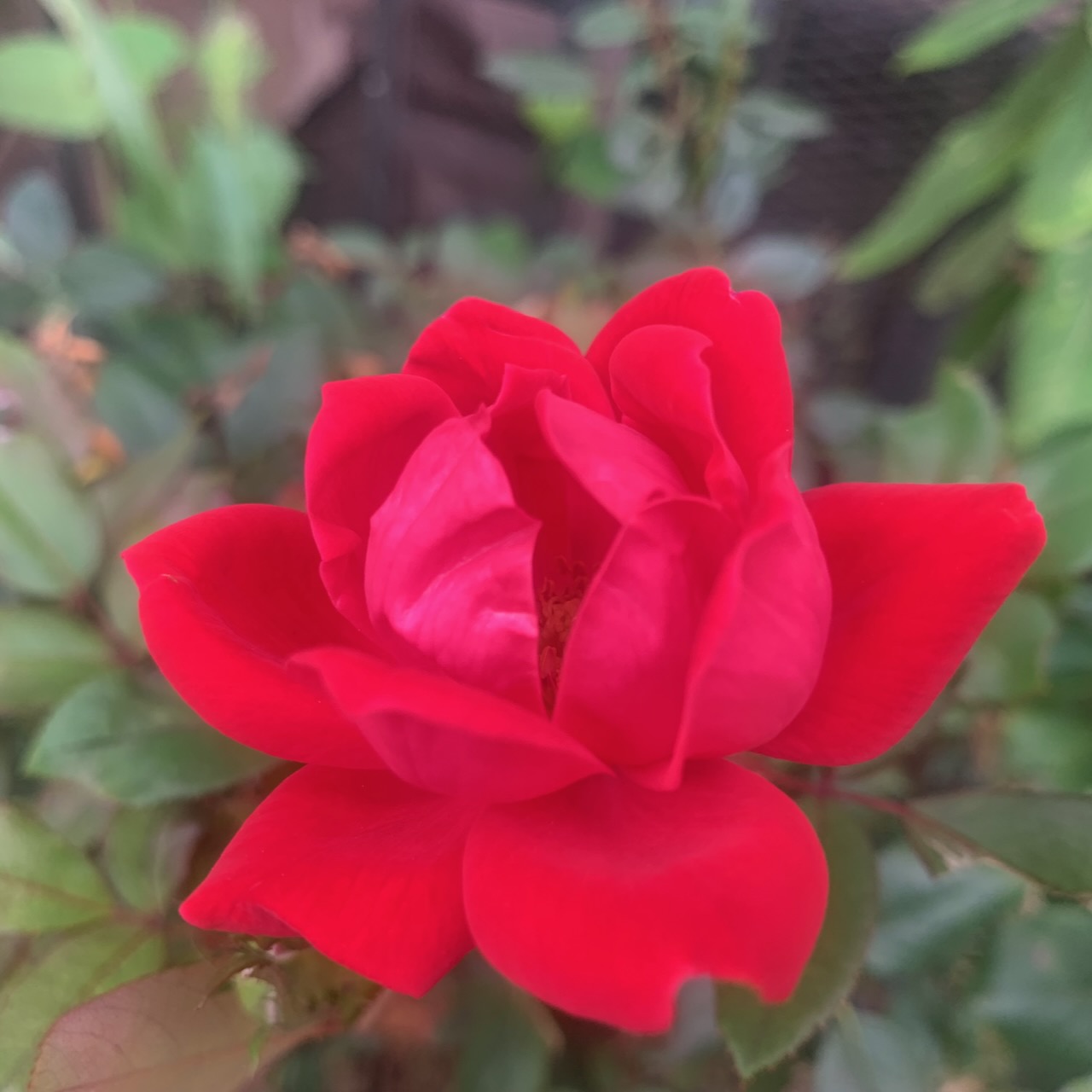
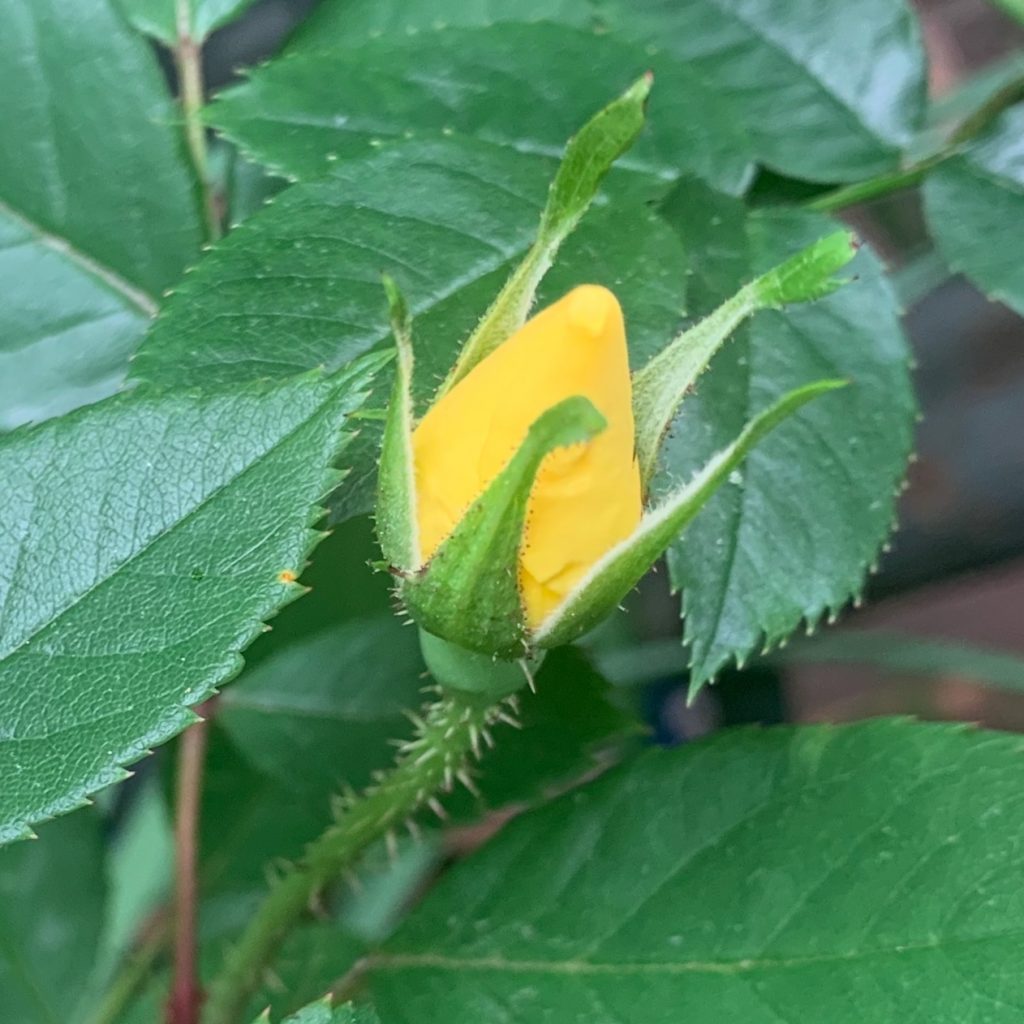
A couple of the rose bushes are still putting out new buds that are so intensely colorful that my phone’s camera doesn’t really know what to do with them.
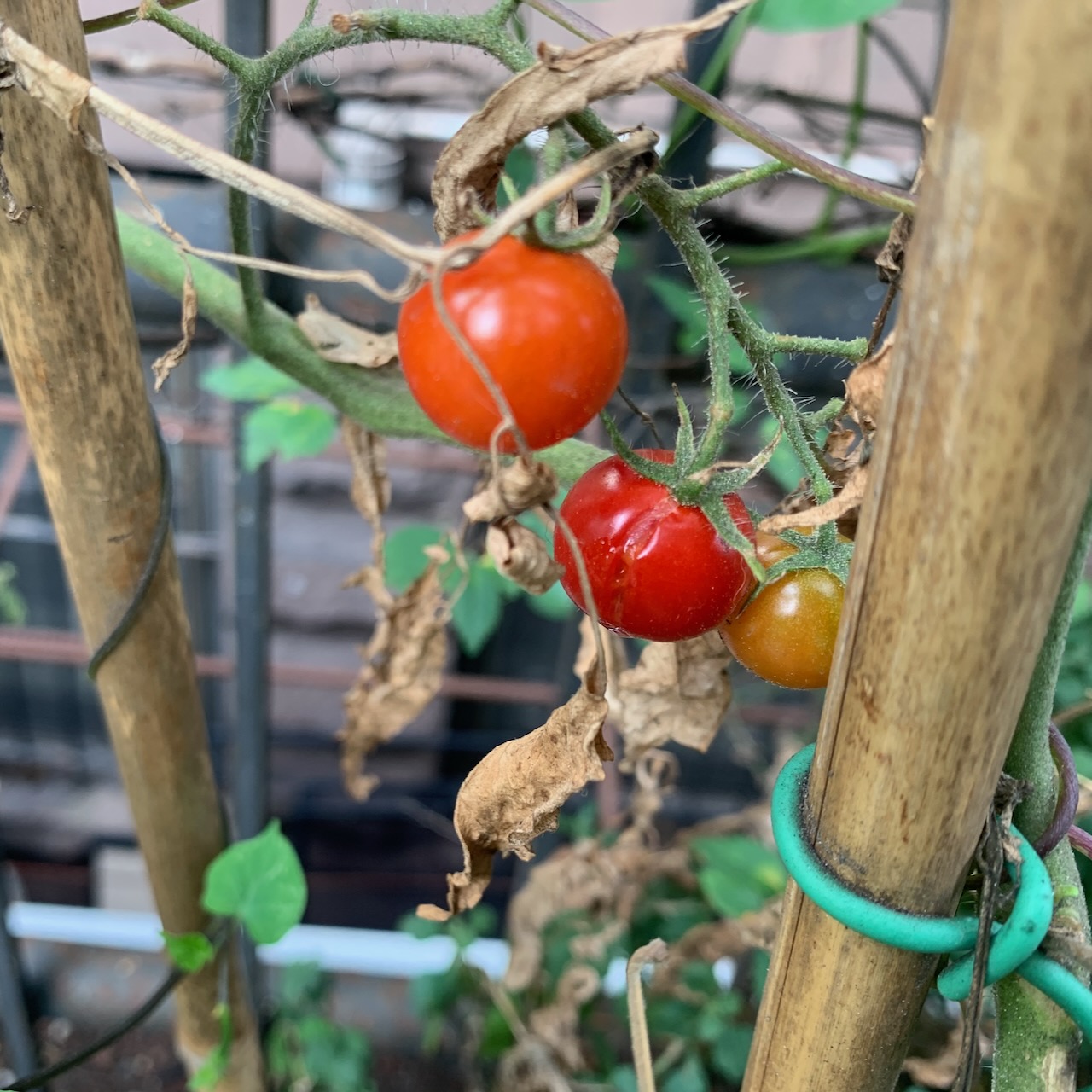
The tomato plants are dying back, but throwing the last of their energy into ripening just a few more fruits.
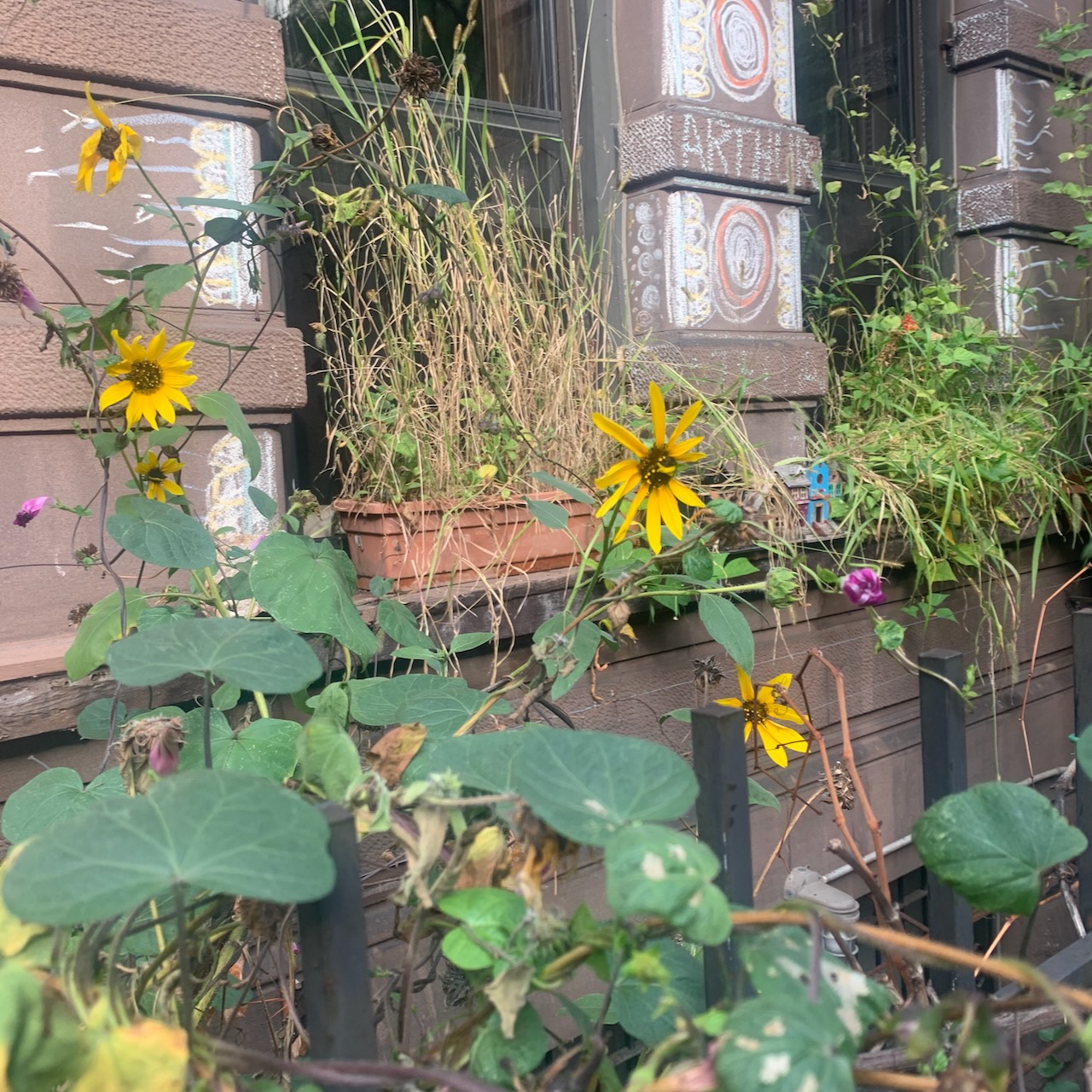
And the giant sunflower has decided to go out with a bang.
It was only this spring that I learned that coleus is a member of the mint family — square stems, pointy leaf tips, spike of little flowers — but despite this fact you definitely should not eat it.

Typically I’m excited to find unexpected plants cropping up in the garden; I know many people would classify these surprise visitors as weeds, but I’m usually happy to find something new that’s vibrant enough to make a go of it in the challenging environment of our sidewalk containers.
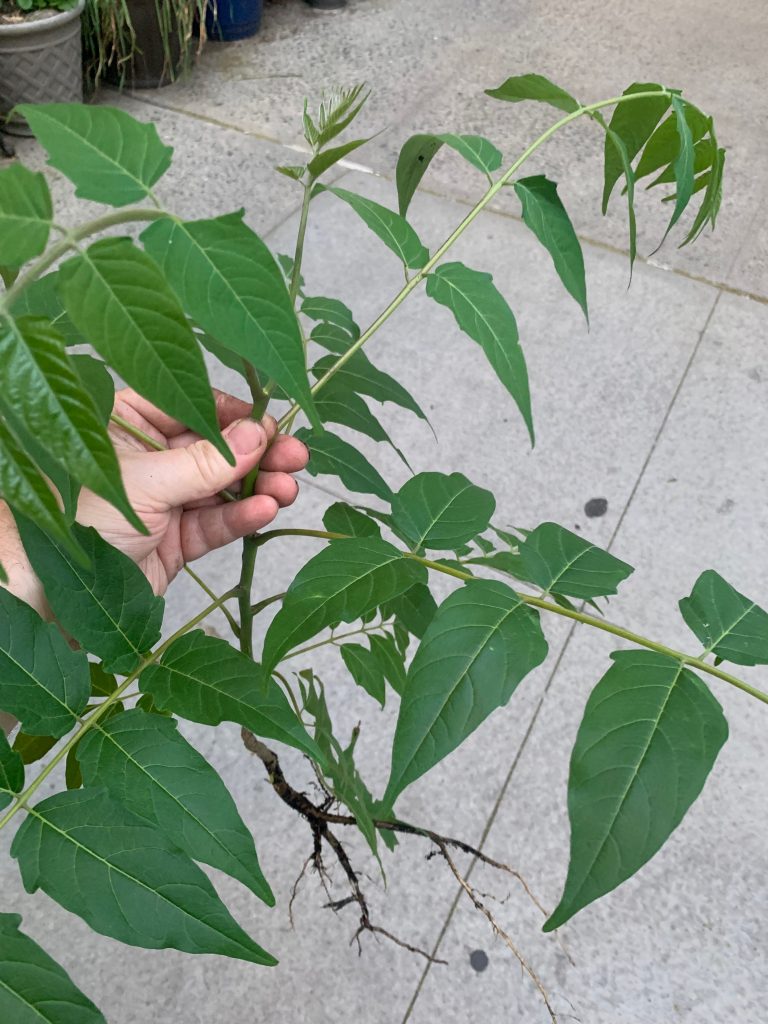
However there are a few exceptions, and when I noticed that a “tree of heaven” (Ailanthus altissima) had cropped up in one of the big grapevine planters, I knew it had to be removed. This invasive species not only has a tendency to crowd out other plants, it’s a preferred food source for the spotted lanternfly — spotted lanternflies flourish and produce more eggs when tree of heaven is present, and then go on to attack other nearby plants.
This unwelcome volunteer has now been banished to the city’s organics recycling bin, and I’ll keep an eye out for any siblings that may be lurking nearby.
I held off on growing roses for a long time, on the grounds that they were a cliche — but then a few years I finally got one and it was such a pleasant addition that I’ve finally gotten over myself and now there’s a handful of specimens in the garden, including this one yellow example.
The grapevines have begun forming their flower buds, and with a bit of luck by the end of August this will be a little cluster of American fox grapes.

As if to measure up to its scarlet cousin currently blooming ten feet away, this pink clover has popped up in another of our containers.
(I think this pink one is Trifolium pratense, while the scarlet is T. incarnatum, but that’s just a guess.)

I scattered a bunch of crimson clover seed a while ago as a nitrogen-fixing ground cover, but I wasn’t quite prepared for how pretty the flowers are.

The giant alliums have put up their starbursts of flowers in our sidewalk treebeds — mostly purple, plus this one even-larger white specimen. These bulbs were planted a few years ago and seem quite happy to come back every spring.

Thanks to our neighbor Anne who donated a pint of seeds harvested in her own garden last season from pollinator-friendly flowering plants: yarrow, coreopsis, echinacea, joe pye weed, black eyed susan, and sage.
These have been scattered into planters and tree beds throughout the garden and I expect to see some of them later this summer, with others remaining dormant and cropping up in subsequent years.
Thanks again, Anne!
